
Table of Contents
- Is Oregano Oil Safe for Daily Skincare?
- Understanding Oregano Oil and Its Skincare Properties
- How to Dilute Oregano Oil for Skin Application
- How to Patch Test Essential Oils Before Daily Application
- Recognizing and Managing Oregano Oil Skin Irritation
- Daily Skincare Use: Acne, Dry Skin, and Sensitive Conditions
- What the Research Actually Shows
- Building a Safe Daily Skincare Routine With Oregano Oil
- Frequently Asked Questions
Last Updated: October 17, 2026
Is Oregano Oil Safe for Daily Skincare?
Oregano oil has become a popular ingredient in natural skincare routines, but whether is oregano oil safe for daily skincare deserves a careful, honest answer. Its active compounds can benefit skin, but safe use requires dilution, patch testing, and attention to individual tolerance.
This guide covers what the science shows about oregano oil for skin, safe dilution practices, and when it suits your routine, and when it doesn't.
Understanding Oregano Oil and Its Skincare Properties
Oregano oil comes from the Origanum vulgare plant. It's a concentrated extract, not a mild ingredient, containing active compounds studied for their potential effects on skin.
The main active compounds are carvacrol and thymol, phenolic compounds responsible for oregano oil's antimicrobial and antifungal properties (Essential Oils of Oregano: Biological Activity beyond Their Antimicrobial Properties).
However, laboratory findings don't automatically translate to safe or effective topical skincare. Oregano oil's strength is both its appeal and its risk.
Active Compounds and Their Effects on Skin
Carvacrol and thymol are oregano oil's star compounds, identified in lab settings as antimicrobial and antifungal, a theoretical benefit for people with acne or fungal concerns. Antioxidant activity is also attributed to oregano oil, though topical antioxidants are less proven than oral ones. The challenge: these compounds are potent. Undiluted or at high concentrations, they can irritate, burn, or trigger allergic reactions.
How to Dilute Oregano Oil for Skin Application
Dilution is non-negotiable for safe daily use. There is no safe way to apply oregano oil to skin without mixing it with a carrier oil first, a mild oil that reduces oregano oil concentration to a level your skin can tolerate. Common options include jojoba, olive, coconut, and sweet almond oil.
Recommended Dilution Ratios and Carrier Oils
For daily skincare use, dilution ratios matter.
Here's why this range works:
- 1% concentration is conservative and suitable for sensitive skin or first-time users
- 2-3% concentration provides more active compound presence while remaining tolerable for most skin types
- Above 3% increases irritation risk significantly, especially with daily use
Jojoba oil is lightweight, absorbs well, won't clog pores, and mimics skin's natural sebum, a good carrier for daily facial use.
Olive-derived squalane is another excellent choice: non-greasy, hydrating, and suitable for all skin types.
Coconut oil is antimicrobial itself but can clog pores in some people.
Sweet almond oil is nourishing but thicker, better for dry skin than oily skin.
Calculating Safe Concentration for Daily Use
To calculate your dilution:
-
Decide your ratio. Start with 1-2% if your skin is sensitive. Use 2-3% if your skin tolerates it well after patch testing.
-
Measure your carrier oil. One teaspoon equals roughly 5 milliliters.
-
Count your drops. One drop of essential oil is approximately 0.05 milliliters.
For a 1% dilution in 1 teaspoon of carrier, 1% of 5 ml = 0.05 ml, which equals 1 drop of oregano oil. For 2%, 2% of 5 ml = 0.1 ml, or 2 drops. For 3%, 3% of 5 ml = 0.15 ml, or 3 drops.
Start at the lower end. You can always increase concentration after confirming your skin tolerates it. You cannot undo a chemical burn while it's happening.
How to Patch Test Essential Oils Before Daily Application
Patch testing is mandatory before daily use, it's the only way to know if your skin will react to oregano oil. Apply a small amount to a small area and watch for reactions over 72 hours, capturing both immediate and delayed responses.
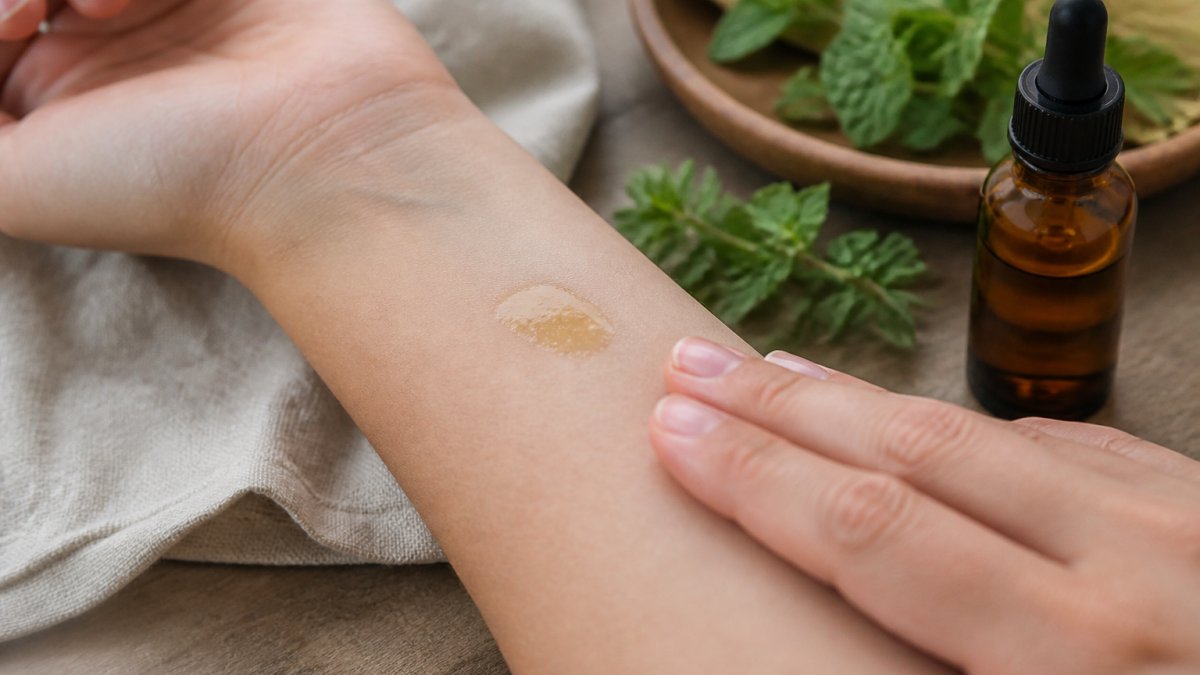
Step-by-Step Patch Testing Protocol
Step 1: Choose your test location. The inner forearm is ideal, sensitive and visible.
Step 2: Cleanse the area. Wash with mild soap and water. Pat dry completely.
Step 4: Leave it uncovered. Don't bandage it or cover it with clothing. Let the skin breathe.
Step 5: Wait 72 hours. Don't wash the area or apply anything else to it.
Step 6: Document what you see. Write down any changes: redness, itching, swelling, burning, or rash.
What to Watch For During the 72-Hour Window
Immediate reaction (within 30 minutes): Burning, stinging, or sharp pain means your skin is reacting.
Itching (6-24 hours): Light itching may fade. Persistent or intense itching suggests sensitization, stop.
Swelling or hives (12-72 hours): These are clear allergic responses. Stop immediately and see a dermatologist if swelling spreads.
No reaction after 72 hours: A good sign that your skin tolerates this dilution level.
Even a negative patch test doesn't guarantee no issues with daily use.
Recognizing and Managing Oregano Oil Skin Irritation
Oregano oil irritation can range from mild redness to significant burning and swelling. Knowing the signs helps you respond quickly.
Signs of Irritation, Burning, and Allergic Reactions
Moderate irritation shows as noticeable redness, burning, or itching that persists after washing. Your skin barrier is reacting, stop use.
Severe irritation or allergic reaction presents as significant redness, swelling, blistering, hives, or intense burning that feels like a chemical burn. Act immediately.
Contact dermatitis is an allergic response to the oregano oil itself, causing redness, itching, and sometimes blistering. It can develop even after previous tolerance, especially with repeated exposure.
What to Do If Irritation Occurs
Cool compress: Apply a cool (not cold) compress for 10-15 minutes to reduce inflammation and burning.
Moisturize: Once dry, apply a gentle, fragrance-free moisturizer to help restore your skin barrier.
Stop use: Don't reapply oregano oil to the affected area.
Observe: Watch for worsening over the next 24-48 hours. If redness, swelling, or burning intensifies or spreads, contact a dermatologist.
Seek professional help if:
- Swelling affects your face or eyes
- Blistering or open sores develop
- Symptoms worsen despite home care
- Irritation persists beyond 48 hours
A dermatologist can confirm whether you're experiencing contact dermatitis, assess your skin barrier, and recommend treatment.
Daily Skincare Use: Acne, Dry Skin, and Sensitive Conditions
Whether oregano oil belongs in your daily routine depends on your specific skin condition and tolerance.
Oregano Oil for Acne and Blemishes
Oregano oil's antimicrobial properties appeal to people with acne-prone skin: if bacteria contribute to acne and oregano oil has antimicrobial activity, it might help. The reality is more complicated. Acne involves bacteria, inflammation, and oil production, and oregano oil addresses only one piece.
More importantly, acne-prone skin is often sensitive, and oregano oil's strength can trigger irritation that temporarily worsens acne.
Dry, Flaky, and Irritated Skin
Dry skin needs hydration and barrier support, not antimicrobial action. Oregano oil doesn't hydrate directly, but diluted in a nourishing carrier like jojoba or squalane, the carrier provides moisture while the oregano oil adds antioxidant benefit without irritating already-stressed skin.
Flaky skin often signals barrier damage, which oregano oil can irritate further. If your skin is flaking or peeling, skip oregano oil until the barrier heals and focus on gentle hydration first.
Who Should Avoid Daily Oregano Oil Use
Skin conditions like eczema or rosacea involve inflammation and barrier dysfunction. Oregano oil's potency can trigger flare-ups.
Active skin barrier damage (severe dryness, cracking, open sores) is a reason to pause oregano oil use.
Pregnancy requires caution with essential oils.
Allergies to oregano, thyme, or other Lamiaceae plants mean oregano oil is not for you.
Recent chemical peels, laser treatments, or other skin procedures mean your skin barrier is compromised.
What the Research Actually Shows
The research on oregano oil for topical skincare is limited. Laboratory studies confirm antimicrobial and antifungal activity, but lab results don't equal real-world outcomes.
What does exist suggests oregano oil can support skin health when used properly: diluted, patch-tested, and at appropriate frequencies. But "can support" is different from "will cure" or "is proven to work." Rigorous clinical trials are few, and many claims come from traditional use, anecdotal reports, or lab findings not replicated in human skin.
Building a Safe Daily Skincare Routine With Oregano Oil
If you decide to use oregano oil daily, structure your routine carefully.
Frequency and Duration Guidelines
For beginners: Start with 1-2 applications per week using a 1% dilution.
For established users: Most people tolerate 3-4 applications per week of a 1-2% dilution. Going beyond this increases irritation risk without added benefit.
Duration: Use oregano oil for 4-6 weeks, then take a 1-2 week break to prevent sensitization.
Daily use is not recommended for most people. Daily application, even at 1-2% dilution, increases the likelihood of irritation, sensitization, or barrier damage over time.
When to Stop and Seek Professional Advice
Stop immediately if:
- Burning or stinging develops
- Redness or swelling appears and doesn't fade within an hour
- Itching becomes intense
- Rash or hives develop
- Your skin feels tight, painful, or damaged
Reduce frequency if:
- Mild redness develops but fades quickly
- Your skin feels slightly dry or tight after application
- You notice increased sensitivity to other products
Seek professional advice if:
- Irritation persists beyond 48 hours of stopping use
- You have pre-existing skin conditions like eczema or rosacea and want to use oregano oil
- You're pregnant and considering oregano oil use
- You're unsure whether your skin reaction is normal or a sign to stop
- You want to use oregano oil for a specific skin concern and need personalized guidance
A dermatologist can assess your skin, recommend safe concentrations, and monitor your progress.
Is oregano oil safe for daily skincare? The answer is yes, but only with the right approach. Dilute it properly, patch test first, and use it conservatively. Botanical Force's Skin Balancing Oil combines oregano oil with jojoba oil and olive-derived squalane. The lightweight, non-greasy texture maintains your skin's natural moisture barrier.
Frequently Asked Questions
Is it safe to put oregano oil on your face daily?
Oregano oil can be used on the face, but only when properly diluted, never at full strength. Undiluted oregano oil is highly concentrated and can cause burning, redness, and contact dermatitis. When diluted to 1-3% concentration in a carrier oil and patch tested first, many people tolerate it for daily use. However, those with sensitive skin, active dermatitis, or a history of allergic reactions should start with lower concentrations or use it less frequently. Discontinue immediately if irritation develops.
How should you dilute oregano oil for skin care?
Start with a 1-3% dilution: mix 1-3 drops of oregano essential oil per teaspoon (5 mL) of carrier oil such as jojoba, olive-derived squalane, or sunflower oil. For sensitive skin, begin at 1% (1 drop per 5 mL). Never apply undiluted oregano oil directly to skin. Always patch test the diluted formula on a small area of inner forearm for 72 hours before adding it to your daily routine. If no irritation appears, you can gradually increase frequency, but stop if burning, itching, or redness develops.
What should you do if oregano oil irritates your skin?
Stop use immediately and rinse the affected area thoroughly with cool water and a gentle cleanser. Apply a fragrance-free moisturizer to soothe the skin barrier. Avoid sun exposure on the irritated area for at least 24 hours. If irritation persists beyond a few hours, intensifies, or includes swelling or difficulty breathing, contact a healthcare professional or dermatologist.
Does oregano oil have antimicrobial and antifungal benefits for acne?
Laboratory studies show that oregano oil contains carvacrol and thymol, compounds with antimicrobial and antifungal properties. These may help reduce acne-causing bacteria and fungal growth on skin. However, most evidence comes from test-tube and animal studies rather than clinical trials on human skin. Real-world results vary widely depending on dilution, skin type, and individual sensitivity. For acne, a properly diluted oregano oil in a carrier oil may help, but it is not a substitute for dermatologist-recommended acne treatments. Patch test first, as oregano oil can irritate inflamed acne-prone skin.


